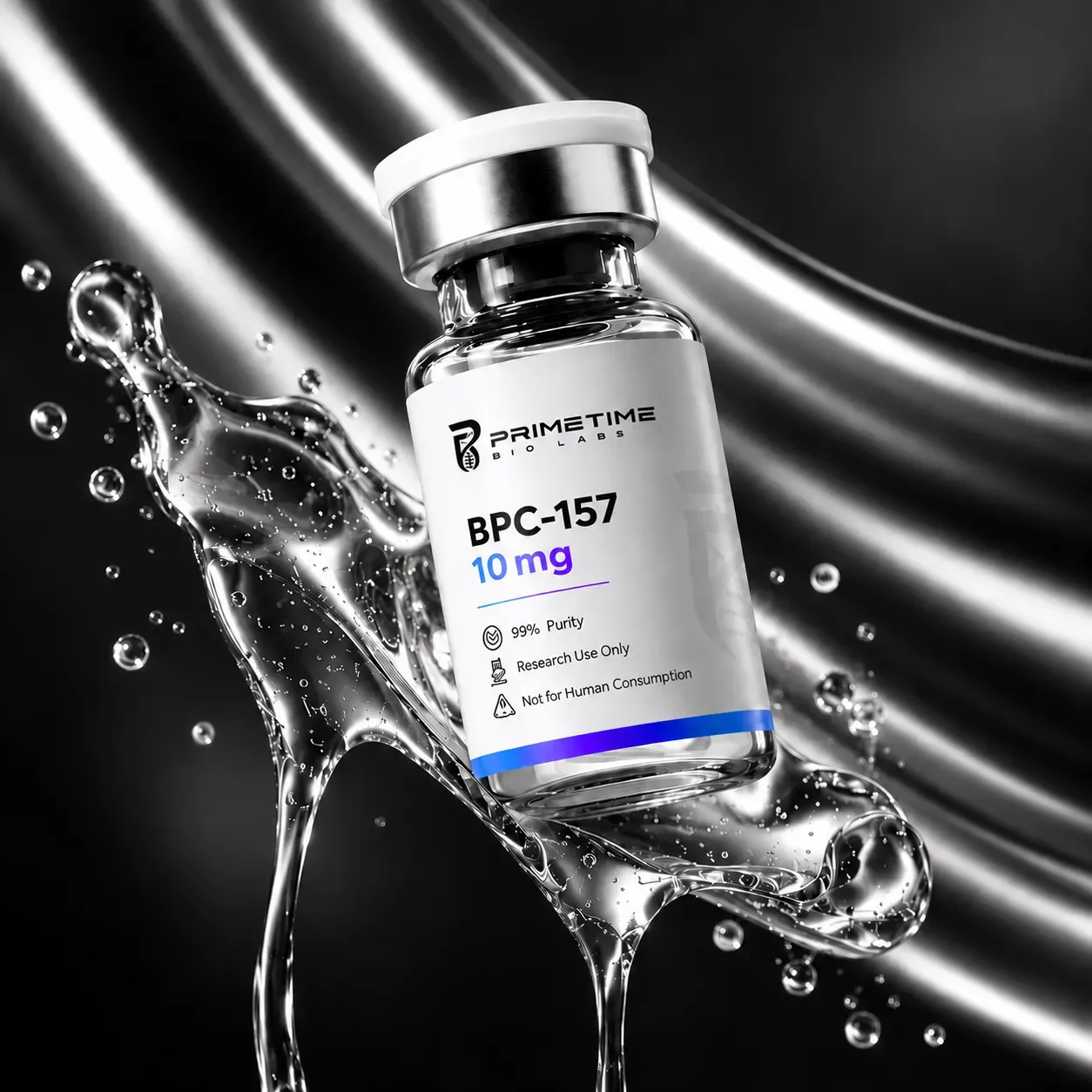
BPC-157
Healing Peptide
BPC-157 is a synthetic pentadecapeptide (sequence GEPPPGKPADDAGLV) supplied as a lyophilized powder with a batch-specific Certificate of Analysis. Sold strictly for laboratory research use.
Dosage
In stock, ready to ship
BPC-157 10 mg is a synthetic pentadecapeptide — a 15-amino-acid chain with the sequence GEPPPGKPADDAGLV (CAS 137525-51-0, molecular weight approximately 1419 Da). It ships as a lyophilized powder in a sealed, light-protected vial with a printed lot number for full batch traceability. Each unit is supplied with general handling information for laboratory storage and reconstitution, intended for qualified researchers working under appropriate laboratory conditions.
You May Also Like
Wolverine
Healing Peptide
Wolverine pairs two of the most widely studied tissue-repair peptides — BPC-157 and TB-500 — in a single vial, giving researchers a practical way to evaluate their combined activity without sourcing, reconstituting, and storing two separate products. Each is well characterized on its own: BPC-157 for its role in angiogenesis and fibroblast migration, TB-500 for its actin-binding activity and involvement in cell migration and vessel formation. Combining them in one vial is meant to simplify protocols for investigators who are specifically interested in how the two pathways interact rather than running them in isolation. Every batch ships with third-party HPLC and mass spectrometry testing and a matching Certificate of Analysis, so the identity and purity behind the blend are documented, not assumed.
Dosage
KPV
Healing Peptide
KPV is the C-terminal tripeptide of alpha-MSH (Lys-Pro-Val), studied in preclinical and in vitro models for NF-κB signaling reported to occur independently of melanocortin receptor binding — a focus of laboratory research into inflammatory signaling and intestinal epithelial biology.
Dosage
TB-500
Healing Peptide
TB-500 is a synthetic, 7-amino-acid fragment of thymosin beta-4 (Ac-LKKTETQ), studied in laboratory models for its actin-binding properties and role in cell migration. This vial contains lyophilized peptide, third-party tested by HPLC and mass spectrometry, with a batch-matched Certificate of Analysis. For laboratory research use only.
Dosage
Frequently Asked Questions
Find answers to common questions about this product, storage, and testing standards.
BPC-157 is a synthetic pentadecapeptide — a chain of 15 amino acids — corresponding to a partial sequence identified in a gastric protective protein. It is manufactured synthetically for laboratory research use and is not a naturally circulating human hormone.
Yes. BPC-157 is a synthetic pentadecapeptide, meaning it is composed of 15 amino acids joined in a defined sequence.
The sequence is Gly-Glu-Pro-Pro-Pro-Gly-Lys-Pro-Ala-Asp-Asp-Ala-Gly-Leu-Val, abbreviated GEPPPGKPADDAGLV (CAS 137525-51-0, molecular weight approximately 1419 Da).
It refers to a vial containing 10 milligrams of lyophilized BPC-157 peptide, supplied for laboratory research use only.
Preclinical studies in cell and animal models have investigated BPC-157's interaction with angiogenesis pathways, fibroblast migration, and tissue-repair mechanisms in gut, tendon, and ligament research models. These are laboratory findings, not evidence of effects in humans or animals.
Human evidence is limited. FDA's July 2026 briefing identified five published human studies involving roughly 80 participants combined, none longer than two weeks. No randomized controlled trial has been completed; a Phase 2 RCT in acute hamstring strain (NCT07437547) is currently recruiting.
No. BPC-157 is not FDA-approved for any use. A July 2026 FDA advisory committee recommended it for possible inclusion on a compounding substances list, but that recommendation is advisory only and has not resulted in approval or listing.
Yes. Every batch is third-party tested, and a COA matching the lot number on your vial is available for download from your account after purchase.
The COA documents batch-specific HPLC purity results and mass-spectrometry identity confirmation for the exact lot number shipped.
Each batch undergoes third-party HPLC testing for chromatographic purity and mass spectrometry for identity confirmation by molecular mass.
No. This product is sold strictly for laboratory and research use and is not intended for human or animal consumption, diagnosis, treatment, or prevention of any condition.
Store the lyophilized vial in a freezer at -20°C, protected from light. Once reconstituted, keep refrigerated at 2–8°C and use within the timeframe noted on the Certificate of Analysis.